
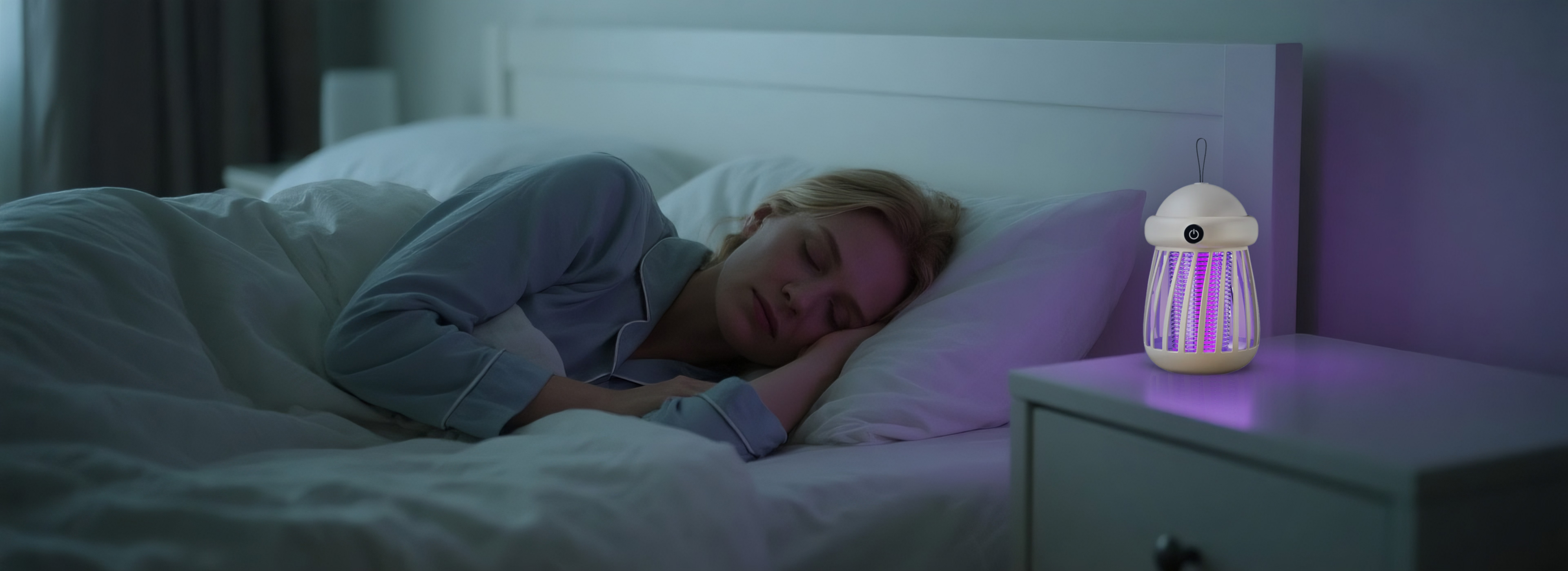
The global mosquito trap market is projected to grow from 364.62 millionin 2022 to 597.48 million by 2030, driven by demand for chemical-free solutions (#). This shift highlights the rising preference for electronic light traps over scent-based repellents.
Scientific Advantages of Light Trap Technology
-
Optimal Attraction Wavelengths Light traps utilize UV-A at 365–370nm, which matches mosquitoes' peak phototactic sensitivity. Patent CN203262087U demonstrates this wavelength increases capture efficiency by 40% compared to broad-spectrum lights (#).
-
Multi-Sensory Simulation Advanced models combine UV light with CO₂ emission, heat radiation (mimicking human body temperature), and lactic acid dispersion to create a comprehensive human-mimicking ecology. This multi-modal approach achieves 90% capture rates for Aedes aegypti (dengue vector) (#).
-
Chemical-Free Mechanism Unlike DEET-based repellents linked to respiratory risks light traps eliminate pesticide exposure. The WHO dengue control guidelines endorse them for hospitals and childcare facilities.
Market Validation & Consumer Trends
- Cost Efficiency: Light traps reduce long-term expenditure by 57% compared to recurring purchases of coils/liquids.
- Environmental Impact: Scent-based repellents contaminate soil and water with pyrethroid residues, while light traps preserve non-target insects like pollinators.
- Asia-Pacific Adoption: Accounts for >$120M in sales (2022), driven by dengue outbreaks in tropical regions (#).
FAQ: Addressing Key Concerns
-
Do light traps work against all mosquito species? Efficacy varies by species. Traps with CO₂ attractants capture 85% of Culex mosquitoes but only 60% of Anopheles. Hybrid models (light + odor) are recommended for comprehensive protection.
-
Can UV penetration be hindered by obstacles? Yes. UV waves attenuate when obstructed by walls or furniture. Optimal placement requires dark corners >1m from barriers (#).
-
Are ultrasonic modes effective? No. Studies confirm ultrasonic devices (6,000–12,000Hz) fail to repel mosquitoes. Male mosquito wingbeats occur at 450–600Hz, and females show no aversion to artificial sounds (#).
-
How to maintain trap efficiency? Clean collector trays weekly and replace UV bulbs annually. Solar-powered models require panel dusting every 2 months.
References
- Bao, L. (2025). Electronic vs. Traditional Insect Repellents: Efficacy Comparison. Environmental Health Press.
- Consumer Council HK. (2021). Electronic Mosquito Repelling Devices: Technical Analysis. Choice Monthly, 429.
- State Intellectual Property Office. (2013). Patent CN203262087U: Mosquito Attraction Tool.
- WHO Collaborating Centre. (2024). Aedes Control Guidelines for Dengue Prevention. China CDC Technical Report.
- Insight Partners. (2025). Global Mosquito Trap Market Forecast 2022-2030. Industry Report.